most Coolant temperature sensors
These voltages are not accurate with anything other than a 1k pullup
| Vehicle | 0C | 20C | 40C | 50C | 60C | 70C | 80C | 90C | 100C | 110C |
|---|---|---|---|---|---|---|---|---|---|---|
| Most Japanese | 4.26v | 3.57v | 2.93v | 2.86v | 2.55v | 2.23v | 1.92v | 1.67v | 1.40v | 1.18v |
| Most Aftermarket | 4.26v | 3.57v | 2.93v | 2.86v | 2.55v | 2.23v | 1.92v | 1.67v | 1.40v | 1.18v |
| Most German | 4.28v | 3.60v | 2.78v | 2.43v | 2.12v | 1.84v | 1.60v | 1.20v | 0.75v | 0.56v |
| Most Ford/Chevy/Dodge | 4.26v | 3.57v | 2.78v | 2.45v | 2.12v | 1.59v | 1.36v | 0.97v | 0.75v | 0.60v |
The above chart shows most common coolant temperature sensor data as well as other aftermarket brand sensors (GM Delphi, AC Delco, AEM, NGK, MOTEC NTC, etc.).
This information has been pulled from multiple manufacturer diagnostic manuals and converted from the OEM 2.2k pullup for my 1k pullup, but should still be double-checked for accuracy.
It's important to use the appropriate pullup with the voltages on the chart when inputting in your engine management (unless you are wiring in your own, in which case, pick either 1k or 2.2k).
1k ohm pullup resistors provide a faster response to the ECU, but the difference in speed is negligible for most applications.
most air temperature sensors
The adjacent chart shows most common coolant temperature sensor data as well as other aftermarket brand sensors (GM Delphi, AC Delco, AEM, NGK, MOTEC NTC, etc.).
This information has been pulled from multiple manufacturer diagnostic manuals and converted from the OEM 2.2k pullup for my 1k pullup, but should still be double-checked for accuracy.
It's important to use the appropriate pullup with the voltages on the chart when inputting in your engine management (unless you are wiring in your own, in which case, pick either 1k or 2.2k).
1k ohm pullup resistors provide a faster response to the ECU, but the difference in speed is negligible for most applications.
These voltages are not accurate with anything other than a 1k pullup
| Vehicle | -10C | 0C | 10C | 20C | 30C | 40C | 50C | 60C |
|---|---|---|---|---|---|---|---|---|
| Most Japanese | 4.42v | 4.26v | 3.98v | 3.57v | 3.26v | 2.93v | 2.86v | 2.55v |
| Most Aftermarket | 4.42v | 4.26v | 3.98v | 3.57v | 3.26v | 2.93v | 2.86v | 2.55v |
| Most German | 4.44v | 4.28v | 3.99v | 3.60v | 3.16v | 2.78v | 2.43v | 2.12v |
| Most Ford/Chevy/Dodge | 4.66v | 4.26v | 3.95v | 3.57v | 3.43v | 2.78v | 2.45v | 2.12v |
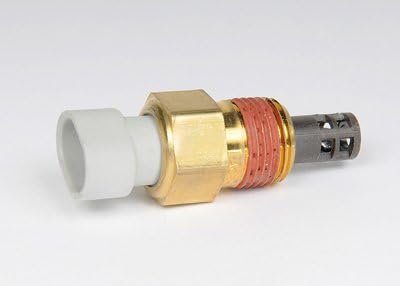
GM Delphi Packard Intake Air Temperature Sensor # 25036751 w Keyway Connector
Buy on Amazon As an Amazon Associate I earn from qualifying purchases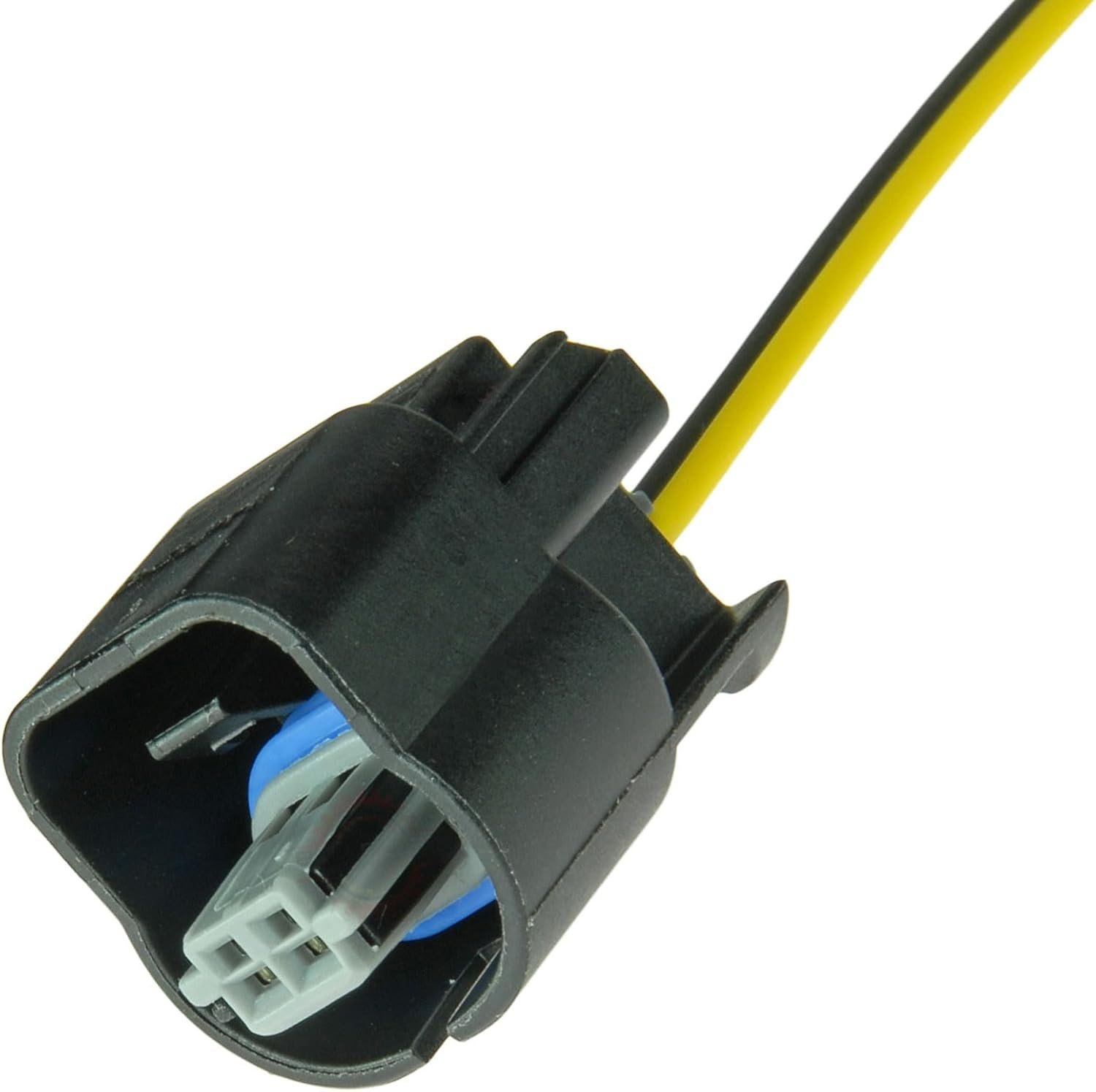
Ballenger Motorsports - 2-way Shrouded GT 150 3.5mm Centerline Sealed Female Pigtail for IAT
Buy on Amazon As an Amazon Associate I earn from qualifying purchases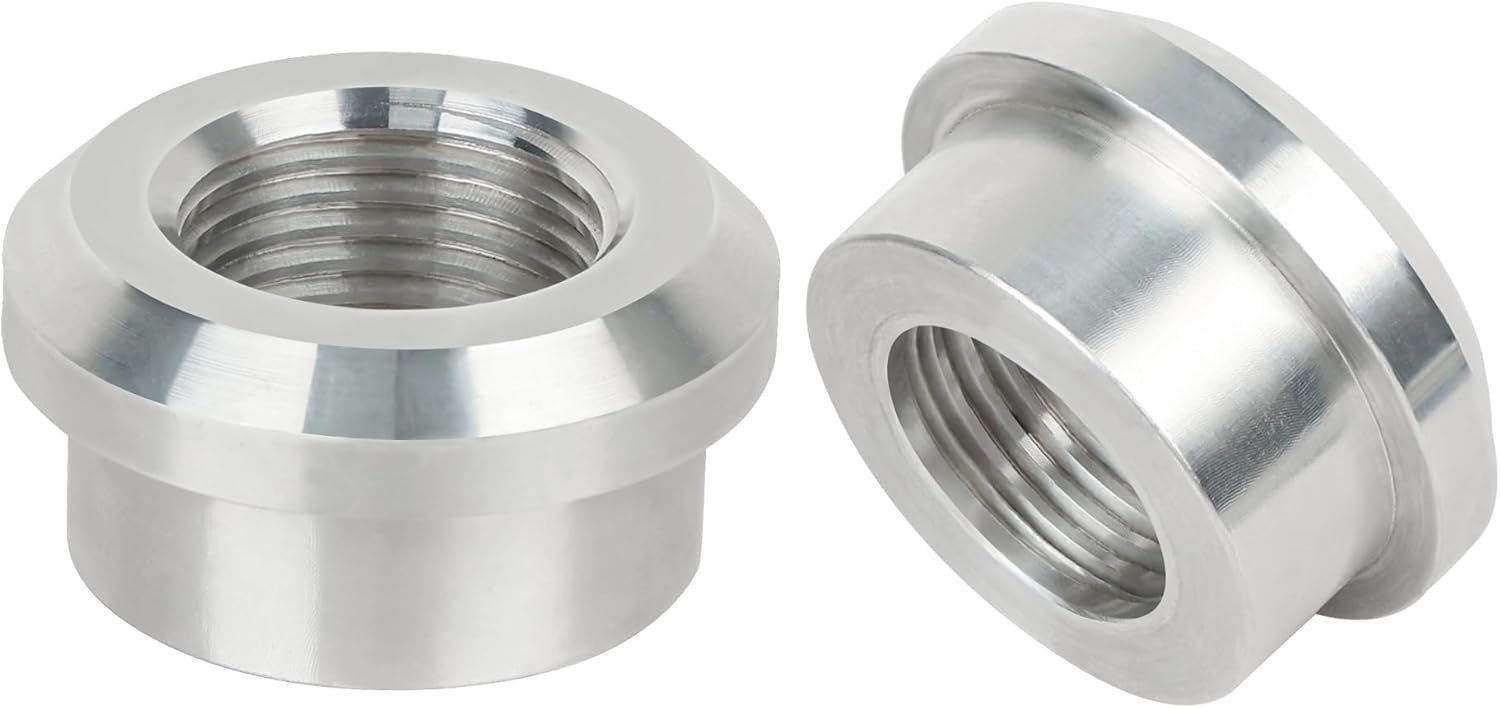
EVIL ENERGY 3/8" NPT Female Weld on Bung Fitting Aluminum 2PCS
Buy on Amazon As an Amazon Associate I earn from qualifying purchases
400 Pcs Heat Shrink Tubing Kit-3:1 Ratio Adhesive Lined,Marine Grade Shrink Wrap - Industrial Heat-Shrink Tubing - Black
Buy on Amazon As an Amazon Associate I earn from qualifying purchases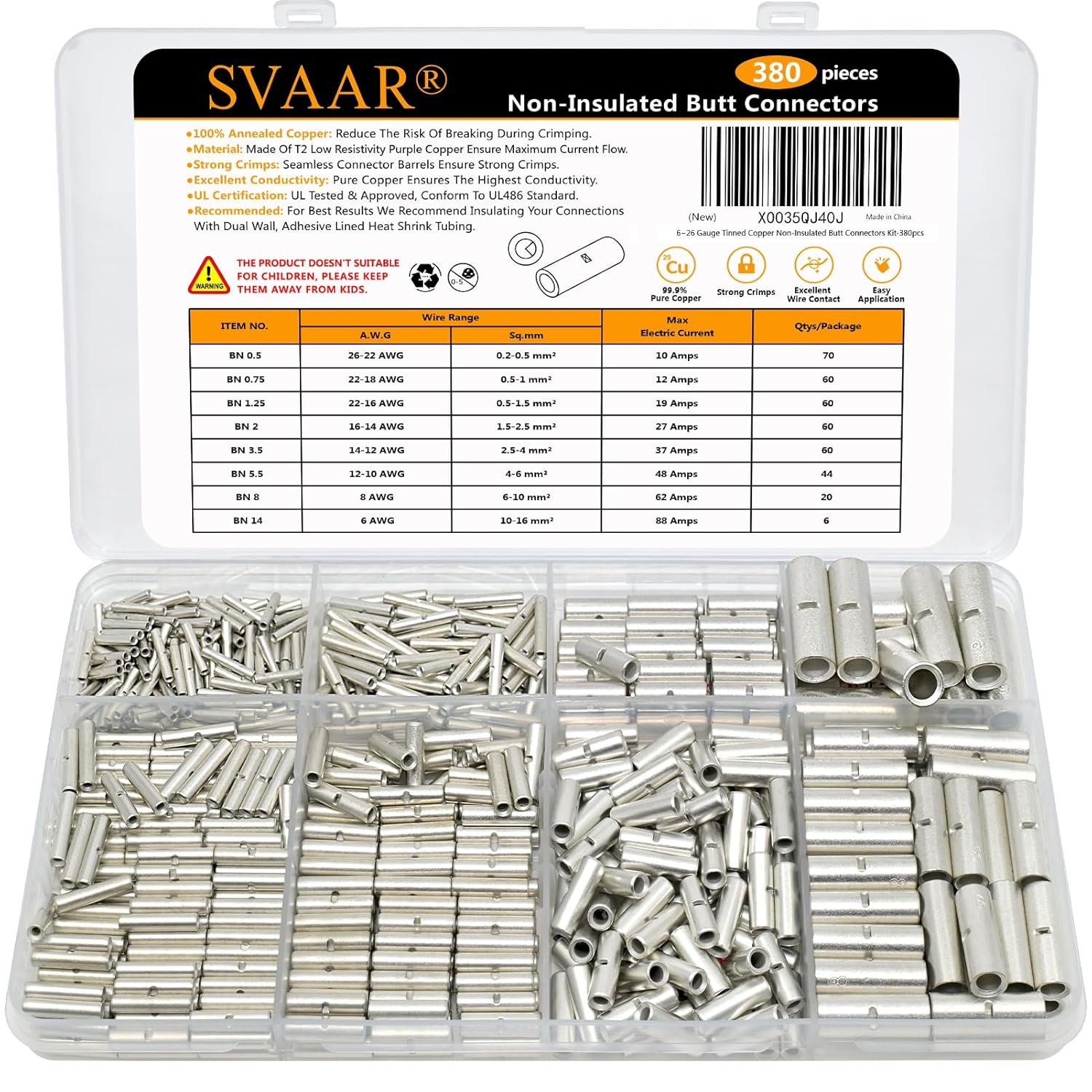
SVAAR 380PCS Non Insulated Butt Connectors Kit Butt Splice Connector Uninsulated Wire Splice Connectors for 26 to 6 Gauge Wire Marine Grade Tinned Copper Seamless Barrel Crimp Butt Splice Terminals
Buy on Amazon As an Amazon Associate I earn from qualifying purchases
GM Delphi Packard Intake Air Temperature Sensor # 25036751 w Keyway Connector
Buy on Amazon As an Amazon Associate I earn from qualifying purchases
Ballenger Motorsports - 2-way Shrouded GT 150 3.5mm Centerline Sealed Female Pigtail for IAT
Buy on Amazon As an Amazon Associate I earn from qualifying purchases
EVIL ENERGY 3/8" NPT Female Weld on Bung Fitting Aluminum 2PCS
Buy on Amazon As an Amazon Associate I earn from qualifying purchases
400 Pcs Heat Shrink Tubing Kit-3:1 Ratio Adhesive Lined,Marine Grade Shrink Wrap - Industrial Heat-Shrink Tubing - Black
Buy on Amazon As an Amazon Associate I earn from qualifying purchases
SVAAR 380PCS Non Insulated Butt Connectors Kit Butt Splice Connector Uninsulated Wire Splice Connectors for 26 to 6 Gauge Wire Marine Grade Tinned Copper Seamless Barrel Crimp Butt Splice Terminals
Buy on Amazon As an Amazon Associate I earn from qualifying purchasestemperature switches
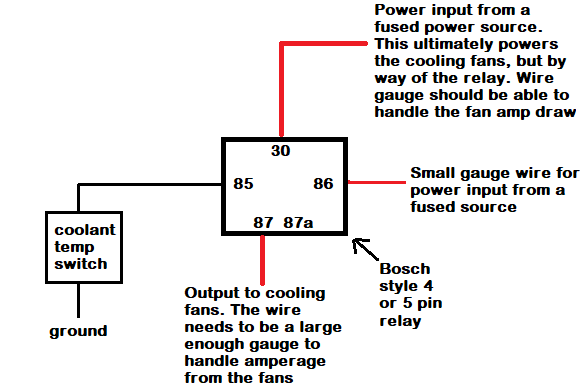
These have one wire or two wires.
- If using a 2 wire switch: one wire should connect to ground, the other connects to your ECU input, relay ground, or bulb.
- 20 or 22 AWG wire works well.
- If the switch is only 1 wire, the case of the sensor is the ground, and the other wire is the "on/off" ground signal.
Since this is a temperature switch, when the desired operating temperature is reached, the switch inside opens or closes.
This can trigger:
- a cooling fan to turn on
- or trigger a high oil temperature warning light.
The coolant temp switch can be wired into a fan relay to trigger it on when the coolant reaches a certain temp if you run out of outputs on your engine management and you want to use the fan output to control something else.
• Available in 1-wire or 2-wire versions
• 2-wire: one to ground, one to signal input
• 1-wire: body grounds through mounting, single wire = signal
• Use 20-22 AWG wire
• Switch opens/closes at set temperature
• Common uses: fan trigger, warning light
• Great workaround when ECU fan output is needed elsewhere
THREE WIRE TEMPerature SENSORS
The signal wire senses the voltage/resistance variations across the other two wires, and depending on whether the sensor was designed to output, the signal wire outputs the voltage/resistance that is converted to pressure, temperature, or position in the ECU.
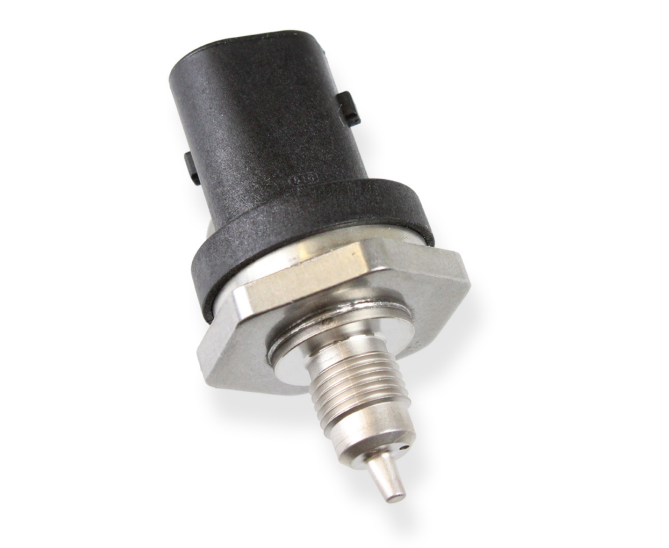
This specific sensor in the adjacent picture is a Bosch PST-F_1 4 wire combination pressure/temperature sensor made for fuel pressure/temperature. It functions the same as a normal 3 wire temperature sensor, the extra wire is for a pressure signal.
Be careful purchasing any sensor, and make sure the threads match what your vehicle accepts. The PST-F1 in the adjacent picture has M10x1 threads, others have 1/8 NPT thread and some are even 3/8 NPT.
- 5 volt power and sensor ground wires. Both of these wires connect directly to the 5V power and the sensor ground from your ECU, or whatever device is receiving the signal.
- Signal wire: This connects directly to the ECU analog input.
Troubleshooting
- If the sensor is showing 0V, check your signal wire or 5V connection.
- If it is showing 5V, check your sensor ground connection.
• Signal wire varies voltage/resistance based on temperature
• 5V supply and sensor ground from ECU
• Signal connects to ECU analog input
• 4-wire combo sensors (pressure + temp) work similarly for temp portion
• Verify thread size before purchase (M10x1, 1/8 NPT, 3/8 NPT common)
• 0V reading → check 5V supply or signal wire
• 5V constant → check ground connection
Always match sensor specifications to your ECU calibration for accurate temperature readings.