using a positive signal as a negative trigger
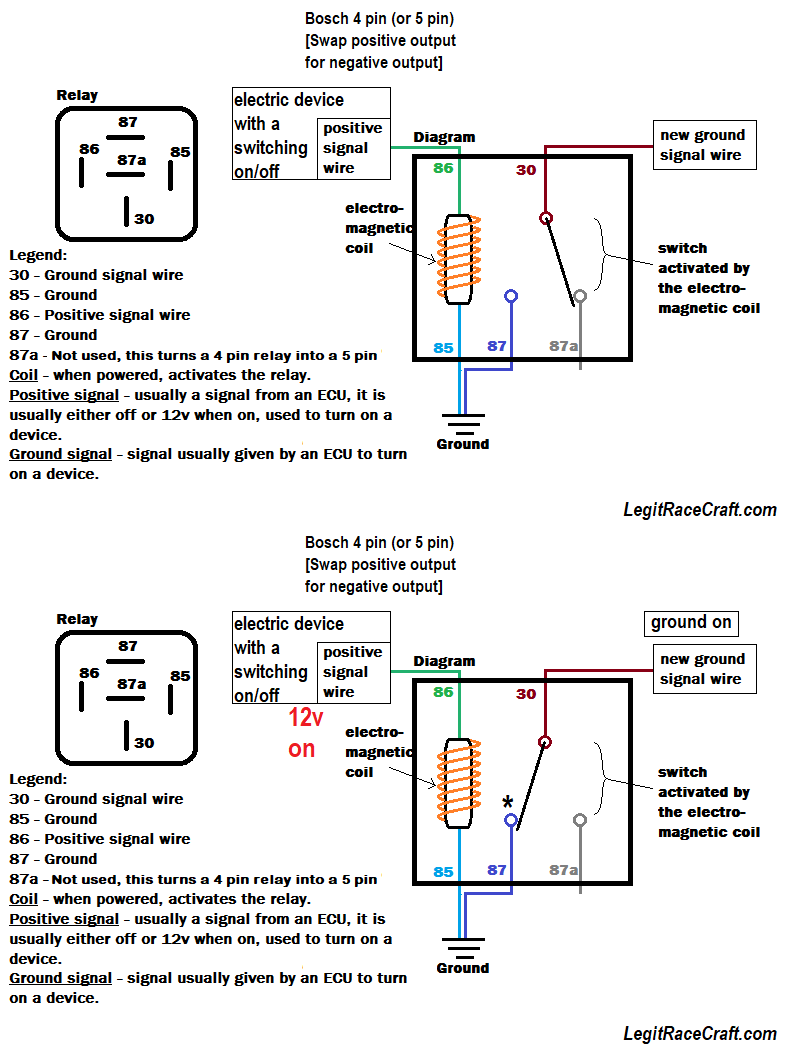
Reverse Relay Wiring — Positive Trigger to Negative Output
Simply put, this is connecting a relay in the reverse way it was intended.
Normally a ground switch will trigger positive power supply. This setup is a positive switch for a negative supply.
The ground connection can support 40 amps (considering you're using a 40-amp relay).
I've used this in a few different ways, but here are 2 common applications:
- I have a positive on/off signal coming from my ECU but I need it to be a negative on/off signal to trigger a device.
- My brake pedal switch is a positive on/off, but I need it to be a negative on/off input for my brake pedal switch input on my engine management. I have a youtube video here that shows the animation of this.
• Normal: Negative trigger (85) → positive output (87)
• Reverse: Positive trigger (86) → negative output (ground side via 30/87)
• High-current ground switching: Up to relay rating (e.g., 40A)
• Common uses: Convert ECU positive signal to negative trigger, or adapt positive brake switch to negative ECU input
Simple polarity inverter — no extra parts needed beyond the relay itself.
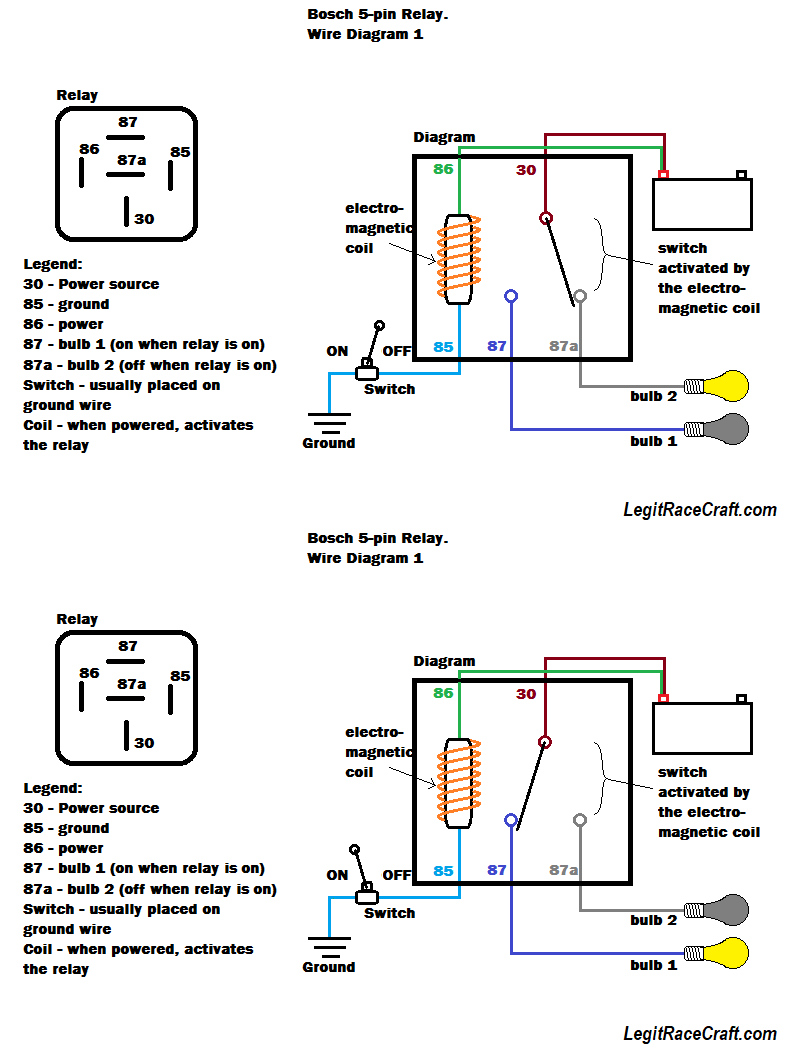
Make your own custom relay setup
Bosch-Style Relay — Electrical Isolation & Pin Functions
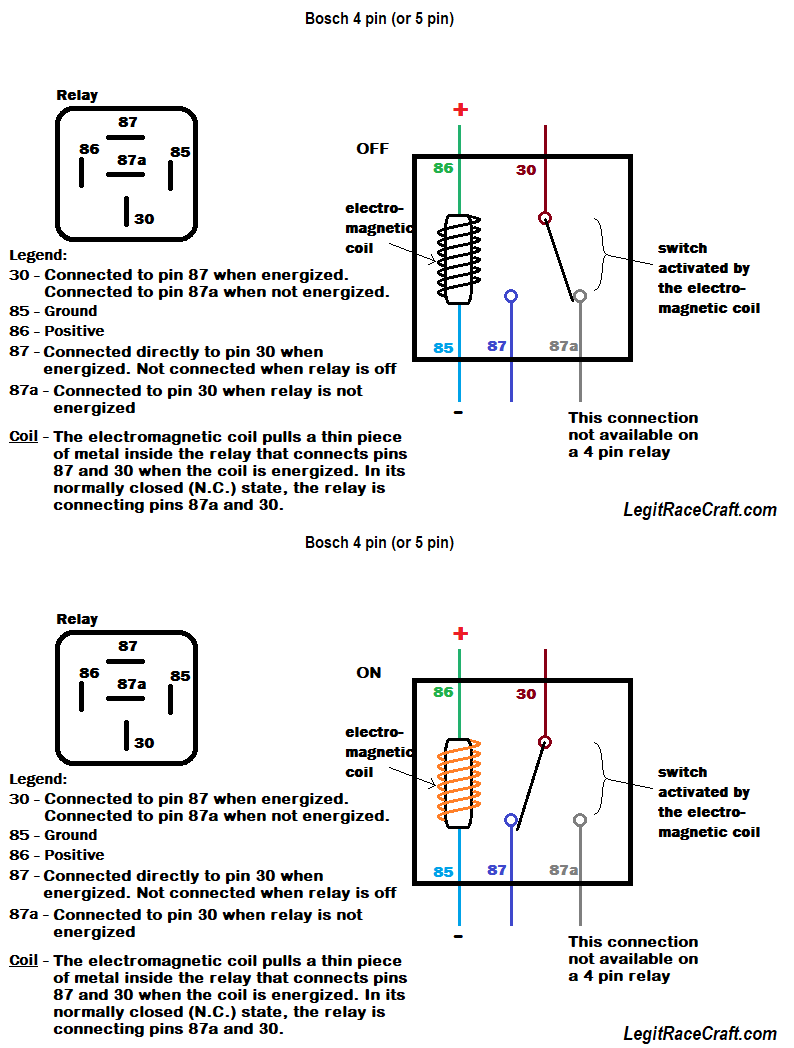
The Bosch-style relay has two halves — one pulls on the other with an electromagnet, so the coil (pins 85 and 86) is not connected electrically to the switch (pins 30, 87, and 87a).
Pin 86 needs to be a positive wire (typically 20 or 22 gauge).
Pin 85 needs to be ground (typically 20 or 22 gauge).
Pin 30 connects to pin 87a in a 5-pin relay when the relay is in the off state (N.C. — normally closed). The 87a pin does not exist in the 4-pin Bosch relay.
Pin 87 is connected to pin 30 when the relay is energized (coil powered — normally open output active).
• Coil (85/86): Electromagnet — electrically isolated from switch side
• 86 = +12V trigger (20–22 AWG)
• 85 = Ground trigger (20–22 AWG)
• 30 → 87a: Connected when relay OFF (5-pin only, N.C.)
• 30 → 87: Connected when relay ON (energized, N.O.)
Key benefit: High-current switching (30/87) controlled by low-current signal (85/86) with full electrical isolation — safe for ECU triggering.
Extra relay information
Relay Delay, Voltage Spikes & Wire Gauges
Relay Delay: The electromagnetic coil used in the relay is not instantaneous, but it is fast enough that it may as well be. Depending on the relay manufacturer, it will take between 5 and 15 milliseconds for a relay to energize.
Voltage Spikes: Relays are known to produce voltage spikes on pins 85 or 86 when the coil is de-energized (also known as flyback voltage spike).
It's a tiny amount of current, but this can damage the device triggering the relay if the device isn't built to withstand a small voltage spike.
Buy quality relays — some have diodes built in to prevent the voltage spike from the coil de-energizing (highly recommended for ECU or sensitive switch triggering).
Wire Gauges:
- Pins 85 and 86 (coil side) can be connected with 20, 22, or even 24 gauge wire depending on the amp draw of the relay. These pins don't require large wires.
- Pins 30, 87 and 87a (switch side) need larger wire that correlates with the amp rating of the relay — generally 12 gauge or larger.
Always check the amp draw of the device you're connecting to your relay before you wire everything together — size the wire and fuse accordingly.
• Delay: 5–15 ms to energize — fast enough for most uses
• Flyback spike: Occurs on coil de-energize → can fry sensitive triggers
• Protection: Use relays with built-in diode (or add external flyback diode across 85/86)
• Coil wires (85/86): Thin 20–24 AWG fine (low current)
• Load wires (30/87/87a): 12 AWG+ based on device amps — match fuse to wire/device
Quality diode-equipped relay + proper gauge = reliable, spike-safe switching.