welcome to

LEGIT RACECRAFT

Building a beautiful project

While I was learning web-design, I learned about a tool called Adobe Kuler , which, simply put, is a web application built around color-matching. Back when numbers began to be applied to colors for the purpose of computer programming, a few individuals noticed mathmatical patterns between colors that mostly translates that compliment others. In the automotive world, this can be especially useful in project cars that are entering competitions to be judged, or are just built to impress an Instagram following even if you don't have the eye for that sort of thing . My logic is, if you can 1) find simple colors that compliment each other (like my Green with purple accent), 2) keep a tidy engine bay, and 3) hire a good photographer, then your content will promote itself as people share YOUR car on IG!

Translating this into the art of automotive modifications, the Adobe Kuler web-application, you can plug in one color and the webapp will show other complimentary colors. So, what color should you powdercoat your valve covers to? Well, take a picture of your car, upload it to the Kuler tool, and let adobe show you what complimentary colors exist for your build. THEN powdercoat away and start winning trophies or just friends at those Cars and Coffee meets that you attend.

In my situation, my car is deep purple, and I opted to keep the valve cover from the engine I swapped the same shade of semi-dark green due to how well it matches darker shades of purple. The Adobe Kuler web-application confirms this. I also went with purple injectors and had the rest of my visible engine components powdercoated crinkle black (or in the case of the PT6266 turbo, Cerakoted crinkle black) to allow the colors to really pop.

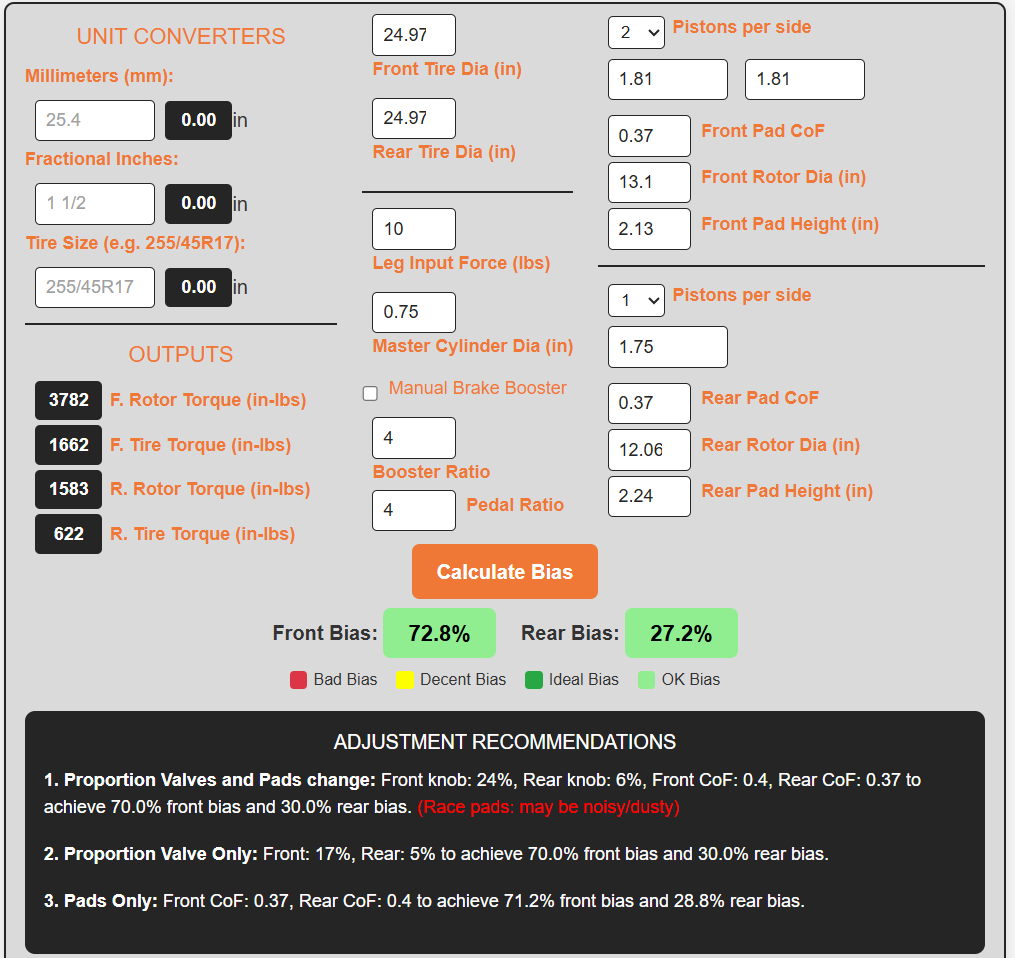
Bias Calculator

Easy-to-use Calculators

Your brake bias and your valve lash are arguably a couple of the most important items regarding a finely tuned engine, and your ability to brake and control your car in a skid. I have poured a ton of time into building a webpage with some good info to tune your car, this includes calculators! It's free to use, and designed by a mechanic/tuner that knows how to build stuff with techy nerdy code stuff (that's ME!). So mess around with them, what do you have to lose?

Brake Bias Calculator, it's easy, just google your current (or future) brake piston diameters, rotor size and the other information it asks for and try to dial in your bias before you buy the parts! Try it out now!

Or for your valve lash , if you're comfortable removing your cams without snapping them, have a go at setting it, there's a cool sense of satisfaction after dialing it in yourself, unless I'm confusing that emotion with the relief after completing something you're tired of working on. I'll warn you, it's a perfectionists ideal adjustment tool that will guide you through hours of adjustments. Try it out now!

Placeholder Picture

unique street tuning + dyno

Street tuning in itself is not unique, but the way I approach it is. I'm not revealing all my secrets here, but one of the things I like to do on street cars is what I call "tuning for RPM by gear". Basically, I make note of the gear and RPM for 25mph, 30mph, 45mph, 65mph, etc. (so all the daily speeds typically driven in a street car) and I customize the RPM rows accordingly. This coupled with a similar column added for engine load for each gear/speed, gives each car a level of effeciency when it's being driven as a daily-driven street car. This doesn't allow the ECU to calculate between the cells when you're driving 45mph at 1800 RPM and -2 PSI, so I log a drive at different common speeds on varying up/down hill drives and then adjust the map while looking at the logs after. Your car will be custom configured to be as effecient as it can be, in addition to being a street-driven monster!


RPM based road speed, 10mph increments

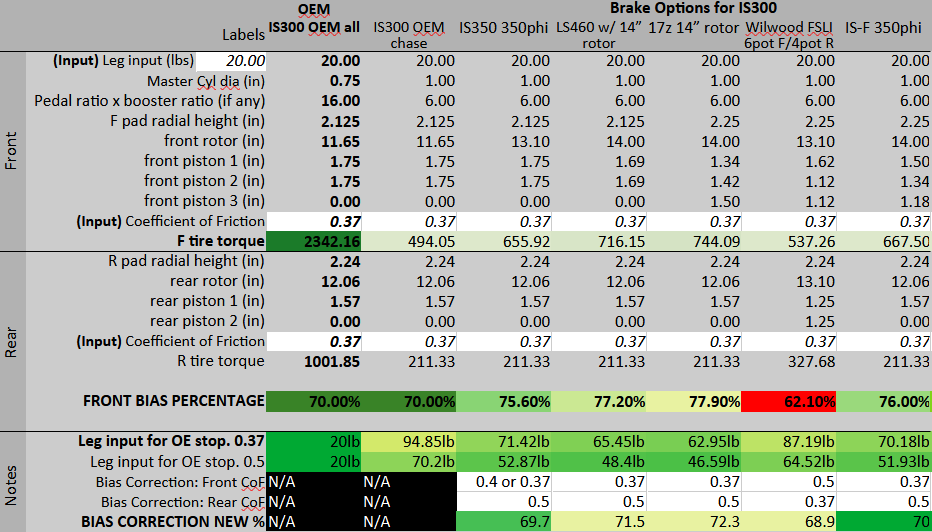
Bias calc spreadsheet
Placeholder Picture

Finding the ideal brake setup

(Advanced brake bias calculator)

There are so many more complexities in brake setups than most people realize. In a nutshell, I have some formulas for brake bias and brake force calculation that reside in a spreadsheet. I like manual brakes (considering they're set up properly). So when dialing in the brakes on my IS300, I was able to take the brake piston diameter, rotor diameter, and effective radius of the brake pad and plug them into the spreadsheet to compare different common brake setups available for my Lexus and look at how this impacts my bias, and compare the kits to determine what's the best for the money, and what pedal pressure is needed with the brakes on a manual setup. This does require at least 18 inch wheels to clear the larger rotors and calipers, and with the larger brakes come an easier performance, but they're pricey. So I'm currently working on installing a Tesla electric booster setup once I can source all the right parts, which means I won't have the manual booster. There are downsides to the manual booster setup that I mention on the brake bias calc page .

want to See more?

Subscribe to my YouTube channel , browse the webpage tabs across the top, OR just scroll my YouTube Playlists here .